The health and fitness onboarding teardown.
23 health and fitness onboarding flows, every screen documented.
Enter your email to get the teardown.
You'll be subscribed. You'll get occasional growth notes in your inbox.
What you get
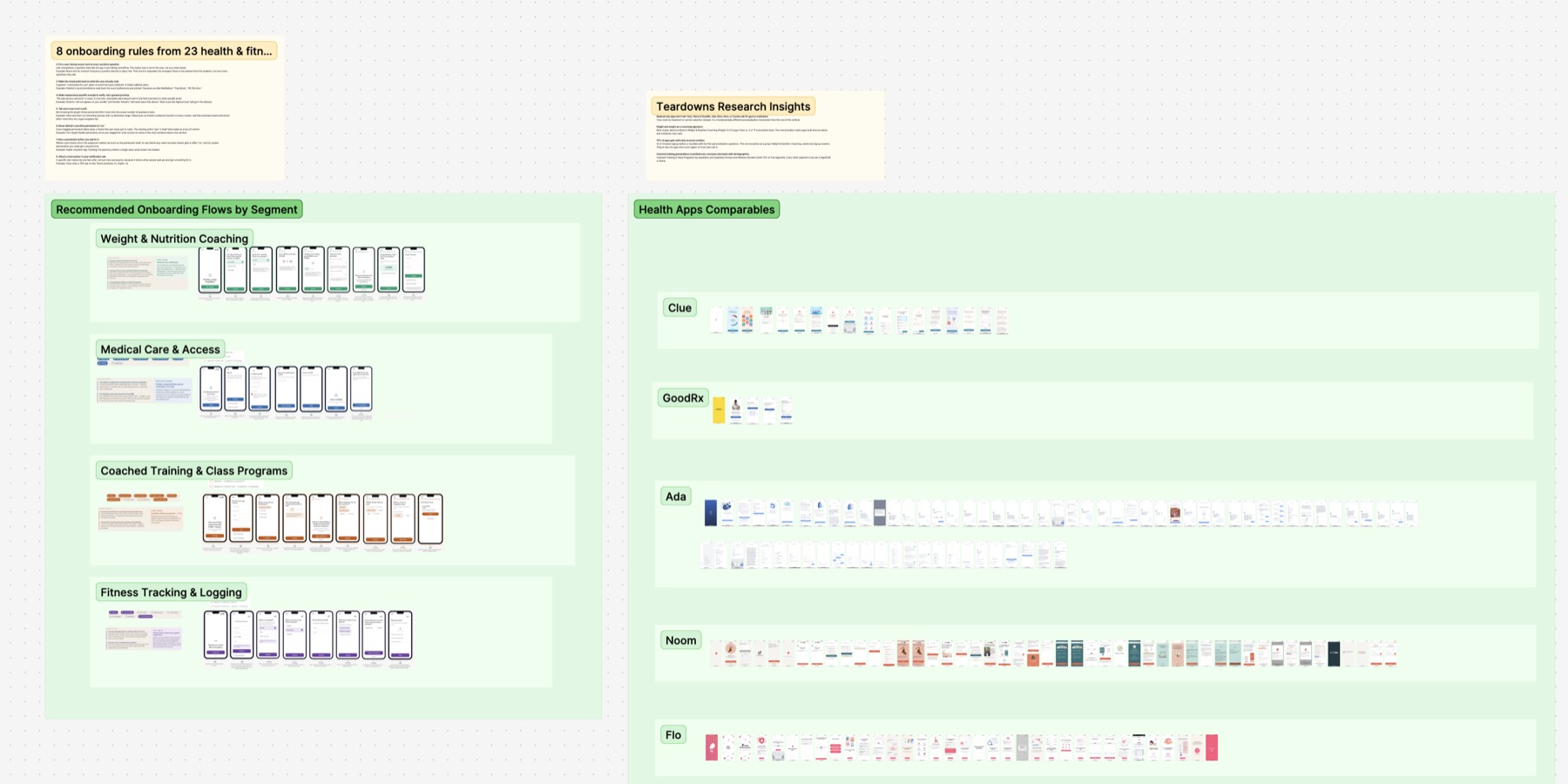
All 23 flows screen by screen, the 8 rules, and a recommended flow for four of the five segments.
What we ran the teardown with. Point them at your own vertical.
The screen-by-screen data the findings were read from.
What I found
My overall verdict with health and fitness is that the main thing that onboarding tries to do is triangulate three things:
- 1.What are your overall goals that you want to accomplish?
- 2.What is your level of experience?
- 3.Where are you today? What are you doing today?
It's trying to triangulate the gap between those things, ultimately, because it's trying to help you achieve your goals and understand: what do you need to do to get there?
Asking for the account up front
Health apps have greater leverage in the beginning. You don't actually need to build up intent. People are coming with a high intent to invest in themselves, so you have high leverage to go ahead and get them to create an account right away. They're already committed. Whereas with another kind of app, sometimes wellness or education, you have to really make a case for them to make an account before they'll go ahead and give it to you.
The question counter
For health and fitness apps, having a question counter during onboarding is even more important, because you're asking a lot of questions about their current investment, current setup, health information, height, sex, age, whatever. People are used to these health forms that have many, many questions, so there's even more anxiety going into health and fitness apps around the onboarding process.
Reasons on the sensitive questions
Having the reasons either within the header or the subheader is really important, particularly for questions where it's unclear what value you're going to get.
The notification ask
Notification asks tend to come off as if it's coming from the product. It's just a marketing thing rather than actually delivering value to the user. If you can, actually reframe that as: what is the value that they're going to get, particularly in some cases, value towards their goals?
Personalization
Personalization only really works if it's specific. There are multiple layers or levels to personalization: you can say it's personalized, you can say how it's personalized, and why it's personalized. The more specific you can be about tying that back, the more people are going to feel like it's really personalized for them, that you are listening, and that you're building up that trust-based, individual, unique experience for them in particular.
I've already done some of this work. I do it for my consulting business, I have all the teardowns, and I've done the work that other people don't have to do.
Want this run on your app?
The teardown is the category. An onboarding audit reads your flow, screen by screen.
See the onboarding audit